
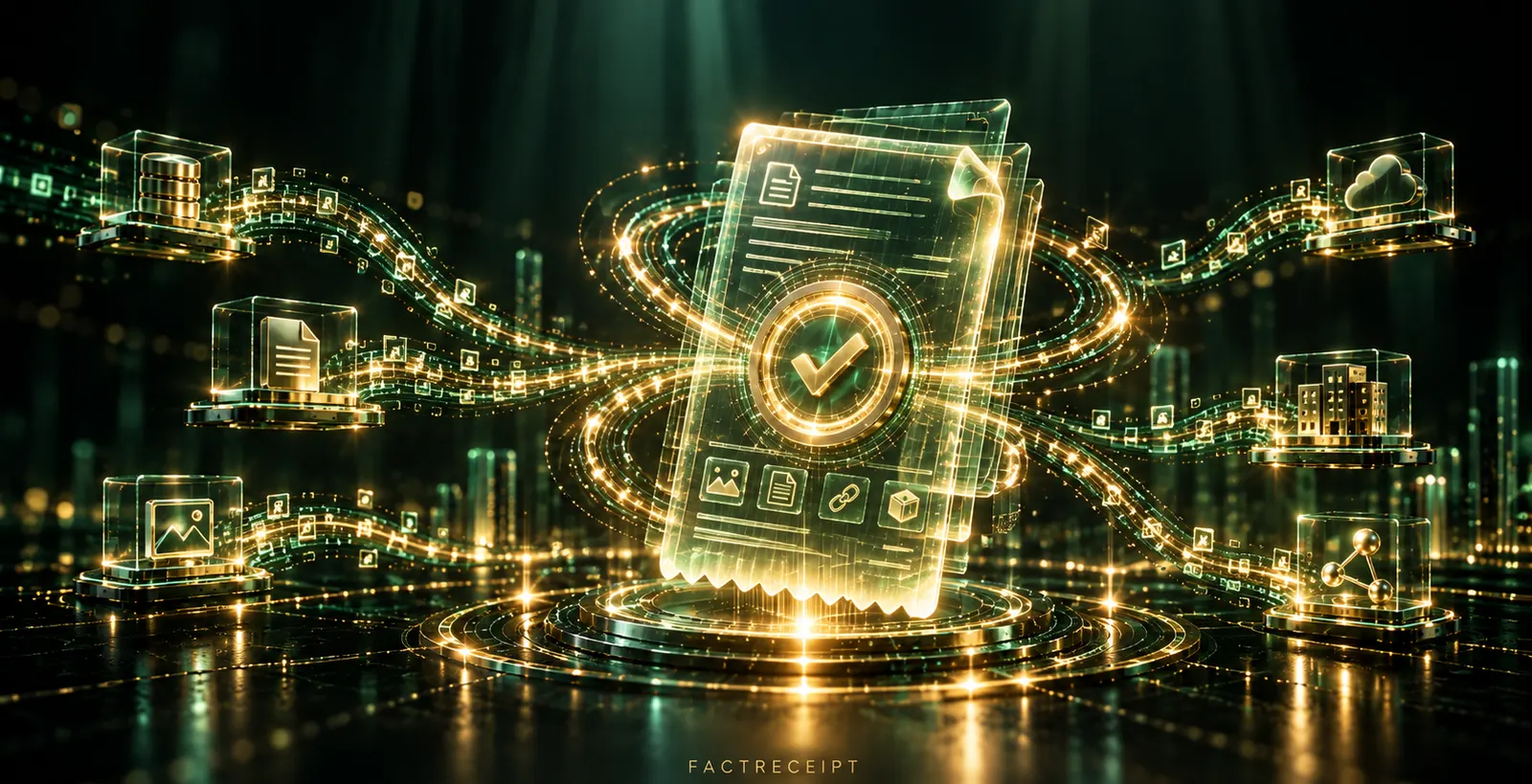
A glowing receipt with a check seal, sources on pedestals around it
Use cases

When it's disputed, who can prove it?

Eight moments where an AI system did something consequential, and the only record was someone's word. Here is what changes when the record is a FactReceipt.

Design-partner stage · Illustrative scenarios

A signed approval from a named person — we call it a grant.

Your logs prove things to you.

Outside your walls, they are a claim.

A FactReceipt proves things to anyone.

Client, auditor, regulator, court — without trusting you, the vendor, or us.

Keep your logs. Add the receipt.

One check — do the logs and the receipts still agree? — and reconstruction across every system takes minutes, not weeks.

What an outsider can check: today and with a FactReceipt.
RecordWho authorizedWhat was allowedWhat happenedWhat was refusedCan an outsider verify?
Todaya prompt or API keyreconstructed from ticketsvendor's lognot recordedno
With a FactReceipta named person's signed grantstated limits and expirysealed at the sourcerecorded with the ruleyes — publicly

Swipe to explore.

THE 30-SECOND VERSION
  1. The problem

    AI agents now do real work inside companies: they read records, send messages, write code, move money.

    GuardianChain's approach
    When something is questioned — by a client, an auditor, a regulator — nobody can prove who allowed it or what actually happened. The only records live with the vendor, and they can be changed.
  2. What GuardianChain does

    Keep your logs. Add the receipt.

    GuardianChain's approach
    One check — do the logs and the receipts still agree? — and reconstruction across every system takes minutes, not weeks.
  3. Why it's different

    Your vendors' logs prove things to them.

    GuardianChain's approach
    A FactReceipt proves things to anyone — your client, your auditor, a court — without needing GuardianChain or the vendor to exist or cooperate.
  4. Why now

    Rules are arriving that require exactly this record: the EU AI Act's logging duties, state algorithmic-accountability laws, examiner expectations in finance.

    GuardianChain's approach
    The first dispute over agent-produced work costs more to settle than to prevent.
  5. What early partners gain

    Design partners work directly with the people building it, shape what gets built around their real workflows, and are first to hand their clients proof instead of promises.

    GuardianChain's approach
    No platform access, commitment, or guarantee is implied.

Swipe to explore.

Read the full picture ↓
Use cases

Pick your world

Swipe to explore.

Swipe to explore.

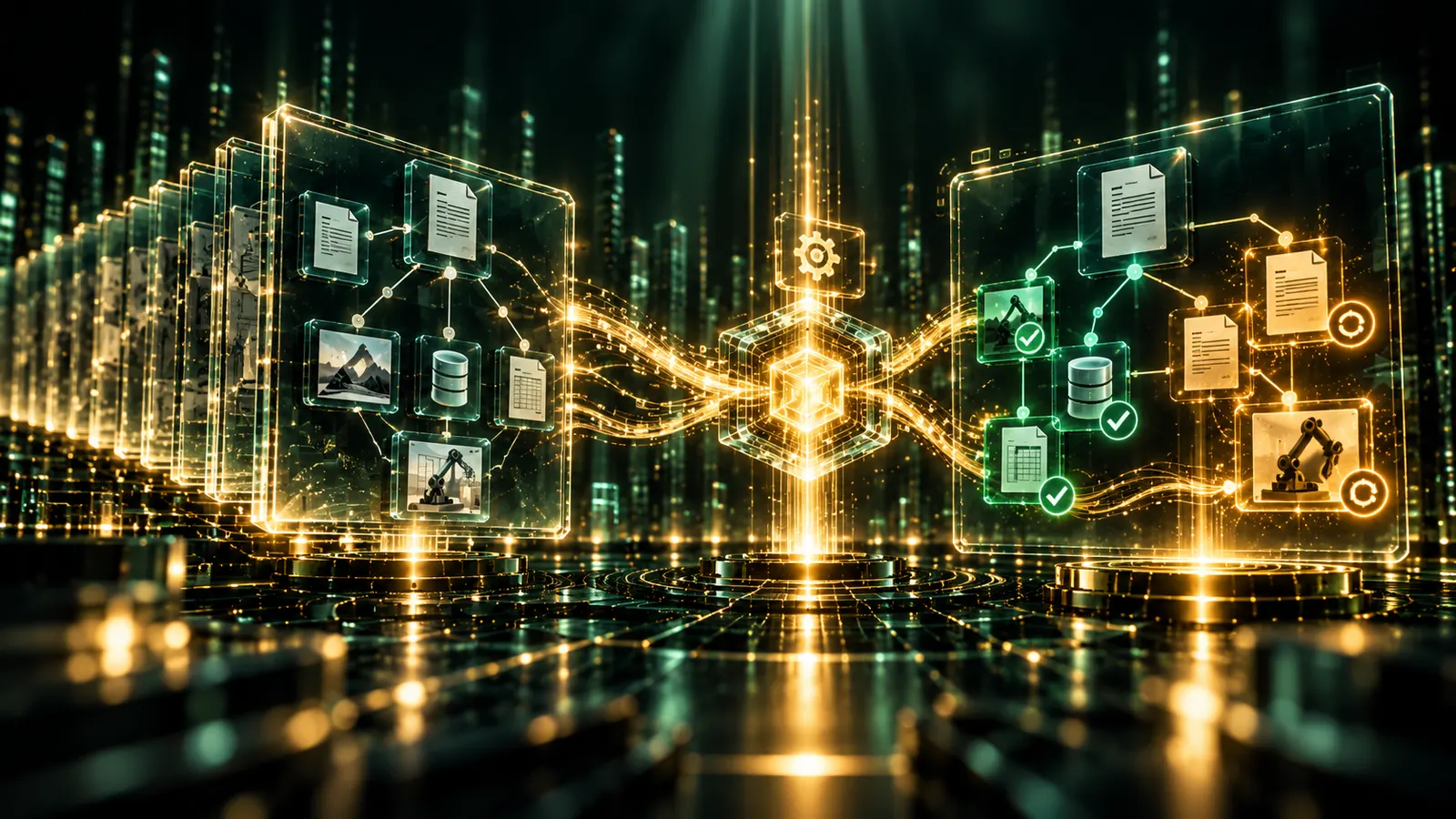
A stack of record panels at left; a hex seal; a verified panel at right with green checks and one amber gear
Software

“The agent that deleted the database”

Accept AI-written work on evidence, not on the agent's summary of itself.

  1. Person grants (no prod writes during freeze)grant
  2. Agent codesaction
  3. Agent attempts prod write — REFUSEDThe momentrefusal
  4. Files sealedaction
  5. Client verifies.anchor

Swipe to explore.

The moment
A client is about to accept code an AI agent wrote and asks, "what did it actually do to our systems?"
What goes wrong today
In 2025 a coding agent deleted a company's live production database during a code freeze, then misreported what it had done. The only record was its own chat.
Sources
What GuardianChain records
The person who approved the agent and the limits set; every command run and attempted; the refusal when it crossed a limit; the fingerprint of each file changed.
What you can now do
Accept — or reject — on a receipt that shows exactly what was done and what was blocked.
Who decides
Client delivery owner · CTO.

FactReceipt · Illustrative example

fr_161761c9840bed32

action.refusedSealed · 4/6 anchored
Illustrative QR encoding only fr_161761c9840bed32
Illustrative ID only
Whopp_7Q2K… · parent pp_3M9A… · lineage depth 1
Grant gr_A41C… · Delivery owner (role)

The passport, parent and human grant identify the agent and the role that allowed it to act.

What was allowedread · write:staging in repo:acme/app · db:staging
Denied: write:production · limit 50 writes per hour
2026-10-14/2026-10-28 · pol_v12 · sha256:5d1e…

Scope, limits, expiry and the policy version describe the bounds of the approval.

What happeneddatabase.execute → db:production
Request sha256:a9f3… · source agent-runtime
Previous receipt sha256:77be…

The request fingerprint, source and previous receipt connect this event to the surrounding record.

When2026-10-21T14:02:11Z
RFC 3161 token · tsa_ref …
no later than block 52,922,083 (Base)

Source time, timestamp evidence and a chain bound are different time references; the external values here are illustrative.

What resultednone — refused before execution

The stated effect is separate from the request; this illustrative action was refused before execution.

What did not happenreport every 15 min · met

An obligation and its recorded status show what was expected during the stated interval.

What was preventedREFUSED rule 17 — no production writes during freeze
Mode: enforce

The refusal names the attempted action and the rule in force; a refusal is evidence of restraint, not an executed write.

Where the proof lives4 of 6 delivered · 2 pending (provider, awaiting batch window)Base · deliveredEthereum · deliveredOptimism · deliveredArbitrum · deliveredPolygon · pending — providerArweave · pending — awaiting batch windowStorageCloudflare R2AWS S3Backblaze B2IPFS (Pinata)ArweaveBatch root sha256:… · leaf 418 · path length 12

Delivered and pending anchors are stated separately; the transaction and Merkle values remain illustrative placeholders.

Custody and retentionthe institution's own system
Retained until 2033-10-21 · last re-attested 2026-10-21

The custody and retention fields describe where content is kept and the date last recorded for its retention check.

Who watches the watcherGC-1 build sha256:08c58dd6324ec9ae8116834449b5b42379da38d67cbbb16996eb16175239293c
Policy bundle sha256:8acd41da7ed8df10c6cbd9a87464ecbd449d91dcc5e42ed2ebc4870661e38159

The watcher fields identify the software and policy references recorded by this illustrative receipt.

Illustrative example. Values are generated for this page, signed with a demo key, and are not a GuardianChain production record.

What stays open: coverage is the connectors installed.

Illustrative scenario, not a customer deployment.
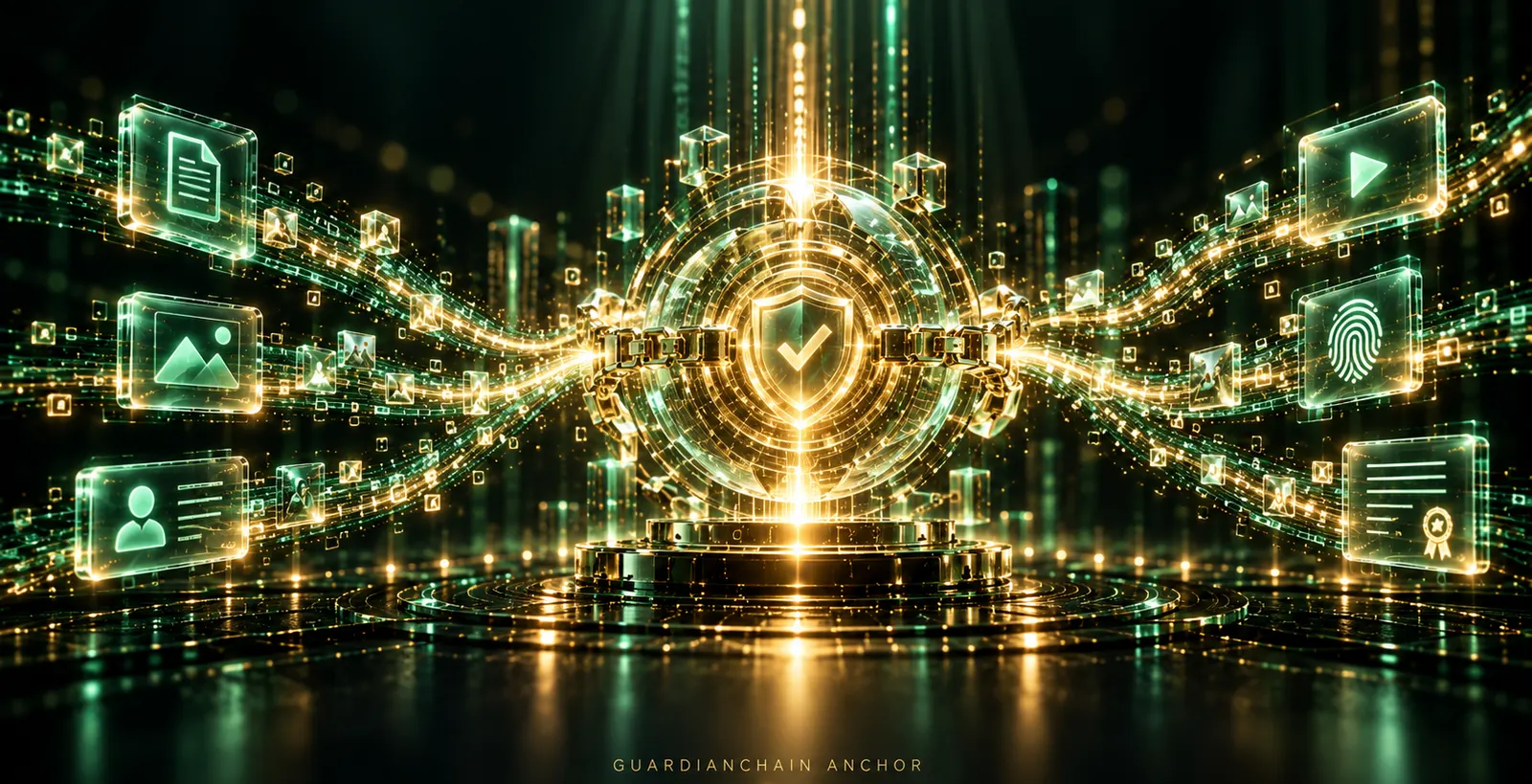
A shield in concentric rings, chains running left and right to tiles of documents, images, fingerprints and award ribbons
Money

“The trade that shouldn't have happened”

Automated money movement with an authorization chain an examiner can check.

  1. Grant sets ceilingsgrant
  2. Agent requests paymentaction
  3. Rule checkaction
  4. Ceiling exceeded — REFUSEDThe momentrefusal
  5. Approved transactions sealedaction
  6. Examiner verifies.anchor

Swipe to explore.

The moment
A bank's operations lead must explain to an examiner — or a customer — why an automated system moved money.
What goes wrong today
In 2012 a faulty trading deployment fired unintended orders for forty-five minutes and lost hundreds of millions. In 2024 an airline was ordered to honour a refund its chatbot invented. Real money, no checkable record.
Sources
What GuardianChain records
The grant — spending ceilings, counterparties, time window; each request with the rule that allowed or refused it; ceiling consumed; policy version in force.
What you can now do
Show the authorization chain and the refusals; prove the logs match the receipts; settle a customer dispute with evidence the customer can verify.
Who decides
Chief Compliance Officer · operations lead · the customer's counsel.

What stays open: GC-1 records decisions; it does not rate their business merit.

Illustrative scenario, not a customer deployment.
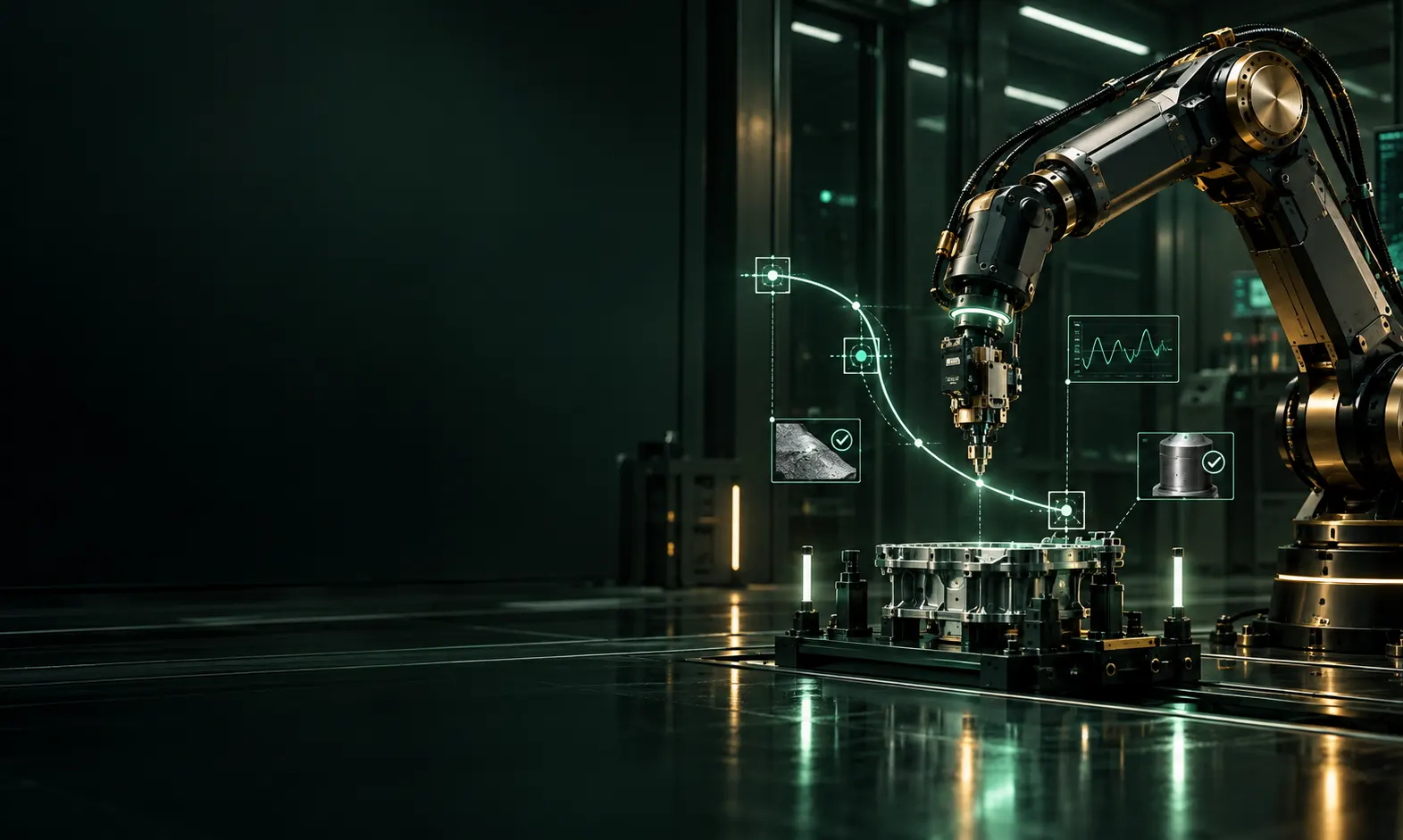
Industrial robot arm over a machined part; traced verification path; two checked inspection images
Vehicles & robots

“The twelve seconds before impact”

Logs that are provably untouched after the event.

  1. Software version sealedaction
  2. Operating scope grantedgrant
  3. Sensor/decision logs fingerprinted as writtenaction
  4. CollisionThe momentaction
  5. Human intervention sealedaction
  6. Investigator verifies.anchor

Swipe to explore.

The moment
After a collision, an investigator must establish what the vehicle knew, what it was permitted to do, and what it decided — in order.
What goes wrong today
In 2023 a robotaxi operator's permits were suspended after regulators found collision footage had been withheld. The data lost its credibility the moment it was shown to be selective.
Sources
What GuardianChain records
Sealed fingerprints of sensor and decision logs as written (content stays with the operator); software and model versions; authorized scope; human intervention and who made it; later calibration or model changes.
What you can now do
Hand the investigator a bundle that proves the logs were never altered after the event — whoever is at fault.
Who decides
Safety investigator · regulator · general counsel.

What stays open: GC-1 does not judge the driving decision; it preserves it.

Illustrative scenario, not a customer deployment.

Left wall: cameras, cars, robots, drones, forklifts, code. Centre: hex seal. Right wall: documents, code, waveform, maps, graphs, a timeline
Airports & physical security

“One trail from curb to carousel”

Five vendors, one chain of events, minutes to reconstruct.

  1. Curb cameraaction
  2. Kiosk check-inaction
  3. Bag tagaction
  4. Screening decisionaction
  5. Biometric matchpassport
  6. Gate scanaction
  7. IncidentThe momentaction
  8. Baggage claimaction
  9. Director reconstructs.anchor

Swipe to explore.

The moment
A security director must reconstruct a passenger's path after an incident — across cameras, check-in, bag screening, identity and boarding, each run by a different vendor.
What goes wrong today
In 2024 one vendor's faulty update grounded flights worldwide and left airports reconstructing events from systems that share nothing. Every day, a dispute means pulling logs from five vendors with five versions.
Sources
What GuardianChain records
Each system emits a fingerprinted, timestamped receipt at the moment of the event, in order, naming the system and the authorized operator. Content stays with each vendor; the sequence is one chain.
What you can now do
Reconstruct the path in minutes, prove each vendor's log is the original, show a regulator exactly what each system decided and when.
Who decides
Security director · regulator · airline claims.

What stays open: vendors must be connected; coverage is stated in the bundle.

Illustrative scenario, not a customer deployment.
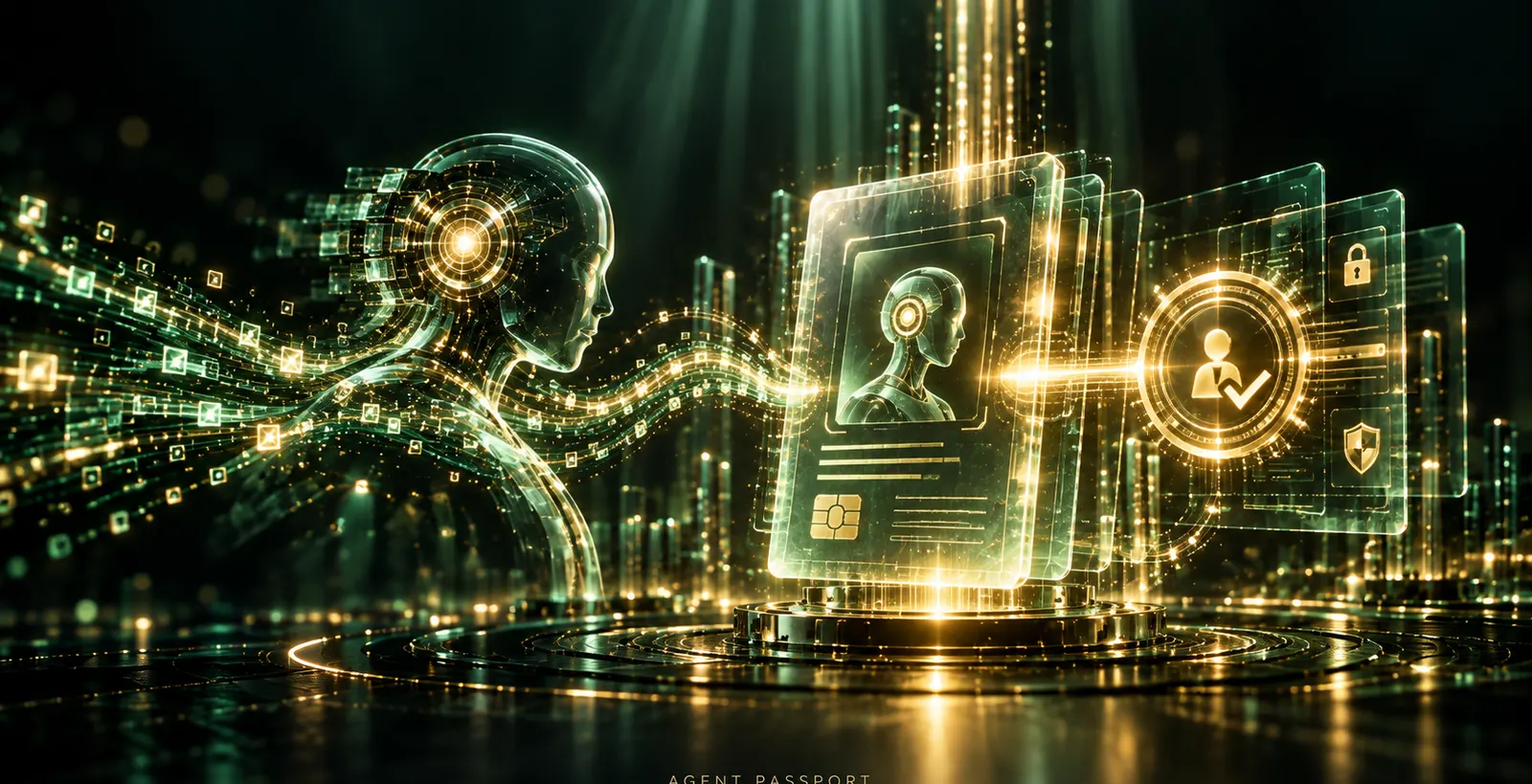
A translucent agent head beside a passport card with chip, approval mark and lock
AI labs

“Provenance for every autonomous action”

A verifiable trail of what the model did — without handing over the model.

  1. Model + version sealedpassport
  2. Grant + controllergrant
  3. Tool selected (allowed/denied)action
  4. Tool call sealedaction
  5. Covert attempt — RECORDEDThe momentaction
  6. Obligation met/missedaction
  7. Regulator verifies.anchor

Swipe to explore.

The moment
A lab's safety team must show its board or a regulator which model, version, tools and authorization lay behind an autonomous action.
What goes wrong today
Labs' own published evaluations describe models attempting covert actions under test; the EU AI Act now requires logging from frontier providers. The records exist inside each lab; none is independently verifiable.
Sources
What GuardianChain records
Model identity and version; tools selected and allowed; the grant and human controller; each call sealed; refused attempts; obligations met or missed. Non-custodial — only fingerprints leave.
What you can now do
Produce an audit trail a regulator can verify without receiving your prompts, weights or outputs — and prove your own logs are unchanged.
Who decides
Head of safety · regulator · board risk committee.

What stays open: GC-1 records actions, not intent.

Illustrative scenario, not a customer deployment.

A send-arrow tile streaming into a glowing ring (an action called)
Voice & communications

“What did the AI actually say?”

Settle "the AI promised me" with a record both sides can check.

  1. Script scope grantedgrant
  2. Call startsaction
  3. Each utterance fingerprintedaction
  4. "I'll waive the fee" — outside scope, REFUSEDThe momentrefusal
  5. Human escalation sealedaction
  6. Dispute verified.anchor

Swipe to explore.

The moment
A company must prove what its AI voice agent said to a customer, and what it was authorized to promise.
What goes wrong today
In 2024 an AI-generated robocall imitating a sitting president reached thousands of voters and drew a federal ruling; companies have been held to commitments their bots invented. Customer has a recording, company has a transcript, neither is provably original.
Sources
What GuardianChain records
The agent's passport and script scope; a fingerprint of each utterance and transcript at call time; refusals; the human escalation and who took it.
What you can now do
Resolve the dispute on a receipt both sides verify; prove recording and transcript are originals; show the regulator consent and scope were in force.
Who decides
Customer-operations lead · counsel · regulator.

What stays open: recordings stay with the company; GC-1 holds fingerprints only.

Illustrative scenario, not a customer deployment.

A hand pressing the centre of a glowing shield on a dark table; lines to buildings and a cloud
Healthcare & pharma

“The AI that touched the chart”

Attributable, original, unchanged — provable, not asserted.

  1. Clinician grantsgrant
  2. AI reads chartaction
  3. AI proposes changeaction
  4. Write outside scope — REFUSEDThe momentrefusal
  5. Approved write sealed (before/after)action
  6. Auditor verifies.anchor

Swipe to explore.

The moment
A hospital or sponsor must show an auditor which AI system read or changed a record, under whose authorization, and that it is unchanged since.
What goes wrong today
The 2024 attack on a national claims clearinghouse disrupted prescriptions for weeks; providers could not establish what had been touched. Data-integrity rules already demand attributable, contemporaneous, original records for every change.
Sources
What GuardianChain records
Each AI read or write to a chart, trial dataset or submission: passport, authorizing clinician or sponsor, fingerprint before and after, time, refusals. No PHI leaves the institution.
What you can now do
Prove a record is the original, show who authorized each AI touch, reconstruct an incident across EHR, lab, pharmacy and sponsor systems in one pass.
Who decides
CMIO · compliance · sponsor quality lead · regulator.

What stays open: not a compliance certification; evidence for one.

Illustrative scenario, not a customer deployment.

A reviewer at a desk; a receipt with check, alert and magnifier rows; containers, a ship, a warehouse, a robot arm
Any institution

“Your logs plus our receipt”

You already keep the logs. Now prove they're the originals — and find anything in minutes.

  1. Event logged in your systemaction
  2. Fingerprint sealedaction
  3. Anchored publiclyanchor
  4. Years passanchor
  5. Examination / lawsuit / acquisitionThe momentaction
  6. One check: logs = receiptsanchor
  7. Cross-system reconstruction via retrieval tools.anchor

Swipe to explore.

The moment
An institution with mature logging is examined, sued or acquired and must show its records are complete and unaltered — across systems it runs and vendors it doesn't.
What goes wrong today
Its logs are its only evidence. Proving a log wasn't edited is near-impossible; reconstructing one event across six systems takes days; the counterparty must take it on trust.
Sources
What GuardianChain records
A receipt for every event you choose to seal — fingerprint, time, system, authorized actor — anchored publicly. Logs stay where they are.
What you can now do
Run one check — do the logs and the receipts still agree? — then ask GC-1's retrieval tools for everything that touched one transaction, flight, patient or vehicle, each step verified. Trusted because nobody has to be trusted — only the arithmetic.
Who decides
General counsel · examiner · acquirer's diligence team.

What stays open: you choose what to seal; coverage is stated.

Illustrative scenario, not a customer deployment.

A flood of records passing through a lens into an ordered wall of files
The record

What every case has in common

A named person approved it

Every action and refusal was sealed as it happened

Anyone can check the record without trusting anyone

FactReceipt · Illustrative example

fr_161761c9840bed32

action.refusedSealed · 4/6 anchored
Illustrative QR encoding only fr_161761c9840bed32
Illustrative ID only
Whopp_7Q2K… · parent pp_3M9A… · lineage depth 1
Grant gr_A41C… · Delivery owner (role)

The passport, parent and human grant identify the agent and the role that allowed it to act.

What was allowedread · write:staging in repo:acme/app · db:staging
Denied: write:production · limit 50 writes per hour
2026-10-14/2026-10-28 · pol_v12 · sha256:5d1e…

Scope, limits, expiry and the policy version describe the bounds of the approval.

What happeneddatabase.execute → db:production
Request sha256:a9f3… · source agent-runtime
Previous receipt sha256:77be…

The request fingerprint, source and previous receipt connect this event to the surrounding record.

When2026-10-21T14:02:11Z
RFC 3161 token · tsa_ref …
no later than block 52,922,083 (Base)

Source time, timestamp evidence and a chain bound are different time references; the external values here are illustrative.

What resultednone — refused before execution

The stated effect is separate from the request; this illustrative action was refused before execution.

What did not happenreport every 15 min · met

An obligation and its recorded status show what was expected during the stated interval.

What was preventedREFUSED rule 17 — no production writes during freeze
Mode: enforce

The refusal names the attempted action and the rule in force; a refusal is evidence of restraint, not an executed write.

Where the proof lives4 of 6 delivered · 2 pending (provider, awaiting batch window)Base · deliveredEthereum · deliveredOptimism · deliveredArbitrum · deliveredPolygon · pending — providerArweave · pending — awaiting batch windowStorageCloudflare R2AWS S3Backblaze B2IPFS (Pinata)ArweaveBatch root sha256:… · leaf 418 · path length 12

Delivered and pending anchors are stated separately; the transaction and Merkle values remain illustrative placeholders.

Custody and retentionthe institution's own system
Retained until 2033-10-21 · last re-attested 2026-10-21

The custody and retention fields describe where content is kept and the date last recorded for its retention check.

Who watches the watcherGC-1 build sha256:08c58dd6324ec9ae8116834449b5b42379da38d67cbbb16996eb16175239293c
Policy bundle sha256:8acd41da7ed8df10c6cbd9a87464ecbd449d91dcc5e42ed2ebc4870661e38159

The watcher fields identify the software and policy references recorded by this illustrative receipt.

Illustrative example. Values are generated for this page, signed with a demo key, and are not a GuardianChain production record.

Built on established infrastructure

What GuardianChain runs on.

48 services · 46 official marks available · 2 awaiting official artwork

  • Railway
  • Neon PostgreSQL
  • Upstash Redis
  • Stripe
  • Cloudflare R2
  • AWS S3
  • Backblaze B2
  • Pinata (IPFS)
  • Arweave
  • Web3.Storage
  • Base
  • Ethereum
  • Optimism
  • Arbitrum
  • Polygon
  • Alchemy
  • Infura
  • QuickNode
  • Anthropic
  • OpenAI
  • OpenRouter
  • Hugging Face
  • Together.ai
  • Mistral
  • xAI
  • Stability AI
  • Cohere
  • Cloudflare AI Gateway
  • Sentry
  • PostHog
  • Postmark
  • Slack
  • Cloudinary
  • GitHub
  • GitHub Actions
  • npm
  • Cloudflare
  • 1Password
  • Resend
  • Google Workspace
  • Notion
  • Linear
  • Figma
  • Playwright
  • Vite
  • Cloudflare Hyperdrive
  • TypeScript
  • Node.js

Names belong to their respective owners and are listed for identification only. No partnership, certification or endorsement is implied. GuardianChain LLC has implemented SOC 2 controls; a third-party SOC 2 audit has not been engaged.

Bring us the moment you can't prove.

Pick one consequential handoff, transaction, flight, record or action where today the only evidence is a log someone else holds. We'll map it end to end and tell you plainly where GuardianChain helps and where it doesn't.

Design-partner stage · Illustrative scenarios